Posts

Showing posts from 2023

Repent Daily: Take Not the Name of God in Vain
Image
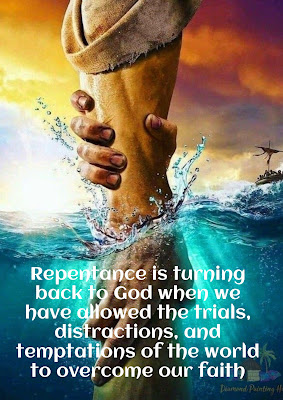
The command to repent is given to every gospel dispensation, but it seems as though there has been a great deal of confusion about what repentance is. We often don’t internalize that repentance is a commandment, a process, and a critical ongoing action that is necessary to be free of sin. Israel was continually commanded to repent. The Mosaic Law included rituals for individual repentance as well as repentance for the whole congregation of Israel. Isaiah described personal repentance this way: “Wash you, make you clean; put away the evil of your doings from before mine eyes; cease to do evil; Learn to do well; seek judgment… Come now, and let us reason together, saith the Lord: though your sins be as scarlet, they shall be as white as snow; though they be red like crimson, they shall be as wool.” — Isaiah 1:16-18 Before Christ, “John did baptize in the wilderness, and preach the baptism of repentance for the remission of sins.” (Mark 1:4) During His earthly ministry, the Savior compare...
Born Again: Take Not the Name of God in Vain

Image
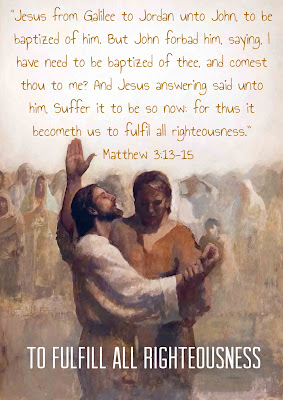
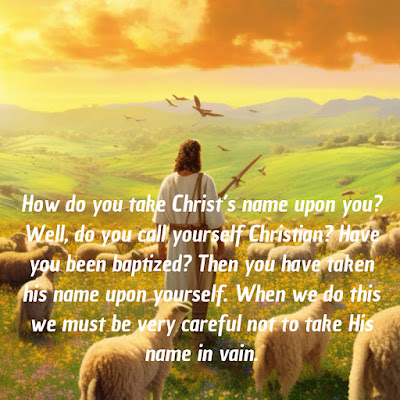
How do you take Christ’s name upon you? Well, do you call yourself Christian? Have you been baptized? Then you have taken his name upon yourself. When we do this we must be very careful not to take His name in vain. When we come unto Christ our first act is to come into a covenant with God through the ordinance of Baptism. As we come out of the waters of baptism we “walk in newness of life” and take upon us the name of Christ, becoming Christians. As Christians we must not take this act in vain but we must strive with all our hearts might mind and strength to love God and serve him, and “henceforth we should not serve sin.” “Therefore we are buried with him by baptism into death: that like as Christ was raised up from the dead by the glory of the Father, even so we also should walk in newness of life. Knowing this, that our old man is crucified with him, that the body of sin might be destroyed, that henceforth we should not serve sin.” — Romans 6:4-6 “Except a man be born of water and ...

Thou Shalt Not Take the Lord in Vain

Image
What comes to our minds when we hear the 3rd commandment “Take not the name of God in vain”? If you are like most believers you think of the use of the name of God as a profanity, an exclamation in passing speech, or a careless or irreverent speech of God’s sacred name as taking the name of God in vain. This is not untrue, it is one important way we break this commandment, but there is another much more harmful way we sin against this commandment and it has to do with what we do with the name of the Lord after we take it upon ourselves. How do we take his name upon ourselves? Well, do you call yourself Christian? If you do, then you have taken his name upon yourself. When we do this we must be very careful not to take this name in vain. Vain: producing no result; useless. Having no meaning or likelihood of fulfillment. The meaning of vain in the context of this commandment is to take his name with no meaning, as a useless gesture, with no result or likelihood of fulfillment of the purp...

No Other Gods: The Law of Tithing

Image
Before I move on to the third commandment this coming week, there is a very important commandment related to the first two commandments to worship no gods except the one true and living God, and that is the commandment to pay tithing. Why is the commandment of tithing in this category? Tithing is a spiritual law related to the sacrifice of temporal treasures in faith and service to the Lord God. God has commanded us to tithe 10% of our worldly increase to the works of God in this world. The earliest scriptural record we have of the tithe is when Abraham brought his tenth to the high priest Melchizedek to square himself with the Lord before receiving the blessings he sought. We know this commandment of the tithe continued among the Israelites. “And that we should bring the firstfruits of our dough, and our offerings, and the fruit of all manner of trees, of wine and of oil, unto the priests, to the chambers of the house of our God; and the tithes of our ground… and the Levites shall bri...

Thou shalt have no Gods but Me, Before No Idols Bow thy Knee

Image
This week we will focus on the first two of the ten commandments. Thou shalt have no Gods but Me Before No Idols Bow thy Knee During the time that the ten commandments were given the religions of the ancient world were entirely made up of false gods and idol worship of those gods. The first two commandments in the law seem to be directly related to the practice of idol worship, so are these commandments relevant to us in a modern time when idol worship is far less common? Yes. We have just as many, maybe more, false gods in our days and the same wicked impulses tempt us to worship them. To examine these commandments are their relevance in our times, let’s think of them as representing matters of the heart and our behaviors. Thou shalt have no Gods but me – A matter of heart, desire, and thought Before No Idols Bow they Knee – A matter of action The natural man tendencies that so easily beset us cause incongruence between our thoughts and our actions. We are just as capable as people in...

On These Two Commandments Hang All the Laws and the Prophets

Image
After covering the greatest commandments in the law, the first to love God and the second to love our neighbors, I am going to explore the study of the laws of God through categories based on the ten commandments. It is of interest that the ten commandments can be understood best by thinking of them as subcategories of the two greatest commandments to love God and our neighbor. When Jesus was asked, “Master, which is the great commandment in the law?” He answered, “Thou shalt love the Lord thy God with all thy heart, and with all thy soul, and with all thy mind. This is the first and great commandment. And the second is like unto it, Thou shalt love thy neighbor as thyself.” He then said that “On these two commandments hang all the law and the prophets.” The ten commandments hang upon these first two greatest commandments. The first five relate to the first commandment to love God and the second five are connected to the second commandment to love our neighbors; though it is essential ...

Love Thy Neighbor as Thyself

Image
This week my posts have focused on the first and great commandment to LOVE GOD. Love is often described as a feeling, an idea, but without the active component of love it does not endure. This is true in God’s love for us, our love of God, and our love for others. How would we know of God’s love for us, except that we experience it in the acts of sacrifice and care he bestows upon us. We know his love because of his constant reaching out to us, his endless long-suffering love toward us, and his daily striving with us. Absent evidence of love, is there love at all? This is how we should examine our love for God. When God commands us to love him, is he asking for us to have soft warm feelings of love and gratitude toward him, but without any of the tangible evidence of love in our actions? If we didn’t have the tangible evidence of God’s love for us, would we know he loves us? No! So too, we must act upon our love for God. Love is more a verb than a noun. Without its active component it ...

Love the Lord thy God with all thy Heart

Image
Now that we’ve established in previous posts a firm understanding of what sin is, why obedience is necessary, and what our obligation to obey the law of the Lord is, let’s learn what the Lord has commanded us to do or not do. I will be organizing the rest of my posts in this study into categories of command. Starting in the order given in scripture. Jesus was asked what was the greatest commandment in the law, and Jesus answered: “Thou shalt love the Lord thy God with all thy heart, and with all thy soul, and with all thy mind. This is the first and great commandment. And the second is like unto it, Thou shalt love thy neighbour as thyself. On these two commandments hang all the law and the prophets.” — Matthew 22:36-40 So let’s begin at the beginning and examine the commandment to LOVE GOD “with all thy heart, and with all thy soul, and with all thy mind” To do this we will need to examine the true nature of love and its connection to obedience to the law. Many people view commandment...

“Be Ye Therefore Perfect”

Image
Why does God command us to be perfect? And is it possible? The simplest answer to the question is that God has commanded all things that are requisite to his plan to bring about the immortality and eternal life of man. The commandments set both the conditions as well as the road map to our eventual perfection and exaltation; they show us the path to becoming what we are meant to become. What are we meant to be? “The Spirit itself beareth witness with our spirit, that we are the children of God: And if children, then heirs; heirs of God, and joint-heirs with Christ; if so be that we suffer with him, that we may be also glorified together.” — Romans 8:16-17 We are children of God and joint heirs with Christ in the courts of heaven if we will meet the conditions and live the laws that govern that kingdom. If this sounds to you like a doctrine of works, don’t be deceived, there are many commandments and among the most important are ones related to faith in Christ and repentance through Chr...

What Does God Expect of Us?

Image
What expectations does God have related to our obedience and what is the purpose for obedience? LOVE GOD…. “Thou shalt love the Lord thy God with all thy heart, and with all thy soul, and with all thy mind, and with all thy strength: this is the first commandment.” — Mark 12:30 OBEY GOD….. “If ye love me, keep my commandments.” — John 14:15 ABIDE IN GOD’S LOVE…. “If ye keep my commandments, ye shall abide in my love; even as I have kept my Father’s commandments, and abide in his love.” — John 15:10 GROW IN KNOWLEDGE, JUDGEMENT, & THE FRUITS OF RIGHTEOUSNESS….. “This I pray, that your love may abound yet more and more in knowledge and in all judgment; That ye may approve things that are excellent; that ye may be sincere and without offence till the day of Christ; Being filled with the fruits of righteousness, which are by Jesus Christ…” — Philippians 1:9-11 REMAIN FREE TO CHOOSE…. “Abide ye in the liberty wherewith ye are made free; entangle not yourselves in sin, but let your hands...

Are We Sinners or Saints?

Image
When Paul says, “For all have sinned, and come short of the glory of God,” (Romans 3:23) does he mean we are all sinful and will remain so while in this world? This statement by Paul may leave some to wonder whether the daily striving to follow is futile if despite our efforts we remain sinners still. If we all come short regardless of our best efforts then why is effort required? The answer should be an encouraging one. God himself, perfect and all powerful, has made declarations that certain faithful followers were “just and perfect.” Of Noah God said, “Noah was a just man and perfect in his generations, and Noah walked with God.” (Genesis 6:9) With that description of Noah’s walk with God, did Noah come short of the glory of God? Assuredly yes! No human being in this fallen state is equal to the glory of God, yet a man who is a devoted disciple, walking with God in a covenant relationship, relying fully upon the merits of Christ, can be just and perfect in his generation (in their t...

Does the Atonement Save Us in Our Sins?

Image
Can we simply say we believe in Christ, go on sinning, and expect that we are saved? Consider that question when you read these passages: “For this ye know, that no whoremonger, nor unclean person, nor covetous man, who is an idolater, hath any inheritance in the kingdom of Christ and of God. Let no man deceive you with vain words: for because of these things cometh the wrath of God upon the children of disobedience. Be not ye therefore partakers with them.” — Ephesians 5:5-7 “Shall he save his people in their sins? …he shall not, for it is impossible for him to deny his word… and he hath said that no unclean thing can inherit the kingdom of heaven.” — Alma 11:34-37 “Therefore God gave unto them commandments, after having made known unto them the plan of redemption, that they should not do evil, the penalty thereof being a second death, which was an everlasting death as to things pertaining unto righteousness; for on such the plan of redemption could have no power, for the works of jus...

Is There a Difference Between Sinfulness and Weakness?

Image
Weakness is a condition of the fall. In our fallen state our natures are subject to the weakness of this state. We are all weak because of the flesh, but unlike animals who are beholden to the dictates of the flesh, human beings are created higher than the beasts and endowed by their Father in Heaven with divine capacities to use their free will to choose holier ways. If we respond to our fallen weakness in pride and choose not to yield to God and his laws, then our weakness will become sinfulness. Weakness makes us susceptible to temptation, but only when we yield to temptation and give the natural man power over our spirits (our divine nature) do we sin. Thus weakness is not the same as sin. Notice in the following passage that the natural man is an enemy to God, but also notice that it is not the human soul (not our spiritual element) that is fallen. “For the natural man is an enemy to God, and has been from the fall of Adam, and will be, forever and ever, unless he yields to the en...

Sinful or SAINT?

Image
Sinful at its simplest definition is to be full of sin. Sinful: wicked and immoral; committing or characterized by the committing of sins. Sinfulness: the fact of being morally wrong or evil. Full of sin Characterized by sin Being sinful When a person is full of sin, they live in a sinful state that impacts the formation of their thoughts, behaviors, and character; that is why they become characterized by sin, their very state of being is sinful. The disciple of Christ can live in this fallen world and suffer the temptations of the flesh without being “full of” sin. A person committed to Christ can and will sin but that person will live in the active redemption of Christ. For them, their nature is not characterized by sin. How is it done? It’s done through the powers of the infinite atonement of Christ. Through His atonement all who come unto Christ with a broken heart and contrite spirit, believing in Christ, will have their sins forgiven. This is the transformation that makes bad men...

The Greater Condemnation

Image
In a previous post we learned that there are classes of sin that are particularly abominable in God’s eyes. And one of those is when a person who had knowledge and light, and walked in the Lord’s path, willfully turns away from the path and intentionally continues in wrongdoing — having a hostility toward God, denying his authority, and actively turning from His way. This type of wickedness comes under greater condemnation. Disciples of Christ… must OBEY Christ! What has the Lord said about the righteous who turn away from the path of the Lord in rebellion and sin without repentance? “For the wrath of God is revealed from heaven against… all men… who hold the truth in unrighteousness.” — Romans 1:18 “He that hateth reproof is brutish… A man of wicked devices will he condemn… A man shall not be established by wickedness…” — Proverbs 12:1-3 “Therefore repent ye, repent ye, lest by knowing these things and not doing them ye shall suffer yourselves to come under condemnation…” — Helaman 14...

Iniquity

Image
Iniquity is a word that is sometimes used synonymously with sin but the more prevalent use of the word is set in the context of the collective sins of a people, most often in reference to the sins of the people of God when they turn away from him and abominations and wickedness becomes widespread within the nation. In most passages containing the collective meaning of iniquity, the people have ripened in sin unto destruction and the judgements of God have come upon them. The descriptions of a people in the state are often characterized by widespread sexual sin and violence. Scripture Passages that Teach About Iniquity

Abominations

Image
In this study of Sin & the Law, it is important to look at the language the Lord uses to describe sin. Other words used in scripture to describe sin are: Abomination, wickedness, and iniquity. Do these terms have specific meanings that further help us understand what sin is and how it affects our relationship to God? In this post we will begin to examine these ideas by looking at the word: Abomination.  Here I will site an article from a blog: Be Stirred, Not Shaken . The author of the article: What Are Abominations Before the Lord? Does a very good job analyzing the use of the word in scripture and defining the basic ideas that define the word in this way: The words “abomination” and “abominable” are used over 170 times in the KJV. The most prominent word translated “abomination” is to ebah to ebah, and signifies that which is disgusting morally, an abhorrence. Three are from the same root word (shequets, shaqats, shiqquts) and mean roughly the same thing— filth, figuratively...

Why Keep the Commandments?

Image
In this study it is my desire to search out those things God has commanded us to do and not to do, so that we might have greater knowledge and understanding of the Lord’s path and hopefully a greater desire to obey his commandments. But why? What benefit is it to know all the things I shouldn’t do? Or for that matter all the things I should? Isn’t blissful ignorance better? 1) To Bring us Nearer Unto Christ “Wherefore the law was our schoolmaster to bring us unto Christ.” — Galatians 3:25 We are brought unto Christ in two ways, knowledge of his ways that we gain in obedience to his laws and dependence on his grace as we struggle to maintain good works and learn that only through his grace (enabling and strengthening power) can we do all things. The Book of Mormon explains this same teaching with the plainness that is characteristic of the Book of Mormon. “And behold, I have given you the law and the commandments of my Father, that ye shall believe in me, and that ye shall repent of you...